

In the modern architectural landscape, the significance of daylight analysis cannot be ignored. As modern architects aim to create areas that not only enhance the human experience but also abide by green principles, comprehending how daylight interacts with constructed spaces becomes necessary. Daylight analysis serves as a valuable tool that shapes design decisions, enhances energy efficiency, and promotes the health of inhabitants. By leveraging the positives of sunlight, architects can create structures that are both attractive and environmentally responsible.
As we investigate the complex world of daylight analysis in this article, we will examine new approaches and tools that support architects in their design practices. From comparing key metrics like daylight factor and spatial daylight autonomy to grasping the influence of daylight modeling on LEED certification and health results, this detailed guide aims to equip modern architects with the information needed to improve their designs. Whether it's leveraging advanced simulation tools or integrating daylight analysis at the outset in the design phase, the insights within will illuminate the path toward creating more luminous, sustainable spaces.
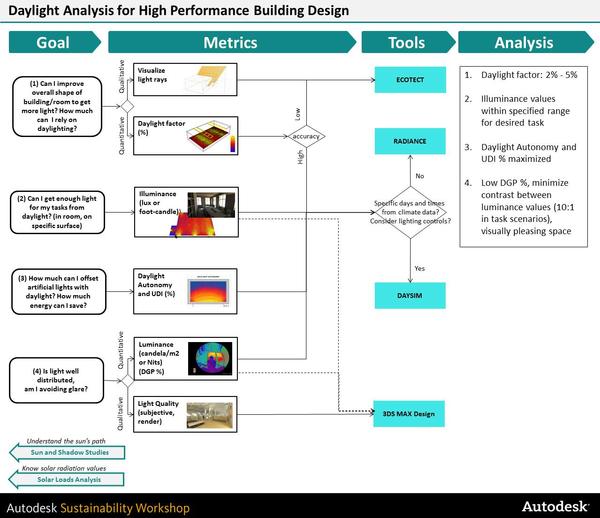
Key Concepts in Daylight Analysis
Evaluating natural light is a vital component of current architectural design, aiming to enhance the use of daylight within constructed spaces. It includes evaluating how daylight connects with a location throughout different times of the day and seasons, which effectively influences not only aesthetic appeal but also energy efficiency. By understanding these interactions, architects can create designs that utilize sunlight for illumination and thermal comfort, thereby reducing reliance on artificial lighting and minimizing energy use.
Two fundamental measures in daylight analysis are the Daylight Factor and Spatial Daylight Autonomy. The Daylight Factor quantifies the quantity of daylight that reaches a location within a room, expressed as a fraction of outdoor illuminance. In contrast, sDA measures the proportion of occupied hours during which a specific area surpasses a predefined daylight illuminance threshold. These measures serve as essential benchmarks for architects to determine how well a design encourages natural lighting and visual comfort in different spaces, impacting overall occupant well-being.
A further key idea is Climate-Based Daylight Modeling, which includes various environmental factors such as geographic location, seasonality, and sun path analysis to provide a holistic understanding of daylight availability. By employing tools that incorporate CBDM, architects can represent how light interacts with building surfaces, improving window placements, and reducing glare. This approach not only enhances visual comfort and contributes to sustainable design practices by improving energy performance and supporting the health of occupants through access to daylight.
Tools and Techniques for Effective Daylight Simulation
To secure accurate daylight simulation, architects have access to a range of specialized software tools. ClimateStudio are common choices, each providing specific features tailored to various aspects of daylight analysis. ClimateStudio is known for its detailed rendering attributes, allowing users to model complex lighting scenarios with accuracy. ClimateStudio offers an intuitive interface combined with effective simulation engines, perfect for assessing daylight metrics in the moment. Insight integrates seamlessly with design software, providing quick feedback and visualization, making it a favorite among architects looking to incorporate daylight analysis initially in the design process.
In addition to software, using effective techniques is vital for successful daylight analysis. Employing algorithms for daylight factor calculations and spatial daylight autonomy (sDA) assessments helps architects understand how natural light will interact with a space over the day and year. Combining these techniques with geographic and climatic data can boost the precision of simulations, allowing for better-informed design decisions. Continuous learning about advancements in daylight modeling methodologies can also improve the efficacy of these techniques in different project contexts.
Integration of daylight simulation with building performance analysis is crucial for maximizing energy efficiency and overall occupant comfort. By taking into account factors like facade orientation, window-to-wall ratios, and shading devices during simulations, architects can create designs that reduce glare and increase natural light. Moreover, applying Daylight Analysis Street Somerset from daylight analysis not only boosts aesthetic qualities but can also influence sustainability certifications, ensuring that buildings not only meet but go beyond regulatory standards in energy performance and occupant wellbeing.
Perks of Incorporating Sunlight Analysis in Architectural Design
Implementing daylight analysis in the architectural design process offers major advantages that improve the energy-saving potential and occupant comfort. By analyzing how natural light behaves with design components, architects can enhance the placement of windows, shading solutions, and the layout of buildings to maximize daylight penetration. This not only decrease dependence on artificial lighting while also leads to lower energy bills, making it a eco-friendly solution for current architectural practices.
Additionally, effective daylight analysis boosts the overall condition of internal spaces. Spaces designed with sufficient natural light enhance occupant well-being, promoting health and output. Daylight exposure has been linked to enhanced mood and concentration, making it particularly advantageous in contexts such as learning spaces and workplaces. Integrating these considerations early in the design process ultimately leads to more health-conscious, more inviting spaces.
In conclusion, the inclusion of daylight analysis supports adherence with sustainable building certifications, such as Leadership in Energy and Environmental Design and Building Research Establishment Environmental Assessment Method. By illustrating attention to natural light use and energy efficiency, designs are more apt to secure a superior certification level. This can enhance marketability and desirability to sustainability-minded clients and users, showcasing a commitment to eco-friendly architectural principles and innovative approaches within the constructed surroundings.